“Just buy more cameras” is expensive advice that rarely solves the actual problem, since a dozen cameras pointed at the wrong spots still miss the one angle that mattered the night something finally happened. The right number depends entirely on layout, not budget or how many boxes a starter kit happens to include.
The Quick Answer Before the Full Breakdown
- Most homes need four to six cameras total, roughly.
- Entry points always outrank interior rooms in priority order.
- Outdoor coverage matters more than most homeowners initially assume.
- Overlap between camera angles prevents dangerous blind spots entirely.
Coverage over quantity, always.
A single-story home with two doors needs fewer cameras than a sprawling house with a side gate, a garage, and a basement walkout nobody considers until later. Counting entry points first, then layering interior coverage second, produces a far more accurate number than guessing based on square footage or simply matching a neighbour’s visible setup.
Front doors, back doors, side gates and garage entries each represent a separate point worth covering individually.
Walk the property’s perimeter noting where fences, hedges or walls create hidden approach routes worth watching closely.
Hallways and staircases matter more indoors than bedrooms, since intruders must pass through shared spaces regardless.
Most homes land somewhere between four and eight cameras once entry points, blind corners and interior choke points are properly accounted for. SimpliSafe’s modular camera kits make reaching that exact number painless, since cameras add individually rather than forcing an all-or-nothing bundle nobody actually needs in full.
A camera facing a wall protects absolutely nothing meaningfully.
Placement beats pixel count.
Buying cameras individually versus starting with a scalable kit changes the whole planning process considerably, since a kit designed for expansion avoids the mismatched brands and clashing apps a piecemeal setup eventually creates. The options below focus on systems built to grow one room at a time, without starting over completely later.
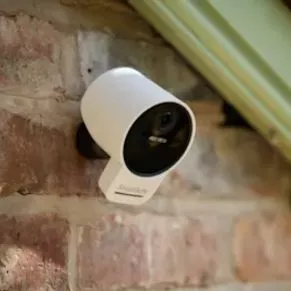
Darkness Doesn't Stand A Chance
Sharp Outdoor Protection That Never Misses A Detail
With HD video, night vision, and 10x zoom, the Outdoor Camera provides clear outdoor monitoring day and night. Active Guard Outdoor Protection can identify potential threats and alert live agents to help prevent break-ins. The camera requires its included power cable for this feature. Sale price: $70, reduced from $199.99.
HD Video
Night Vision
10x Zoom
Threat Alerts
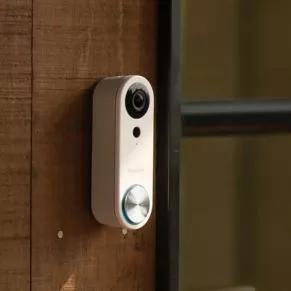
Your Door Just Got Smarter
See Every Visitor Clearly From Head To Toe
The Video Doorbell delivers sharp 2K clarity, giving you detailed head-to-toe views day or night. Its existing wired connection provides continuous power without battery changes. With Active Guard Outdoor Protection, smart AI detects unusual activity and live agents can respond. It requires an existing wired doorbell setup and chime. Sale price: $70, reduced from $199.99.
2K Clarity
Wired Power
Smart AI
Live Response
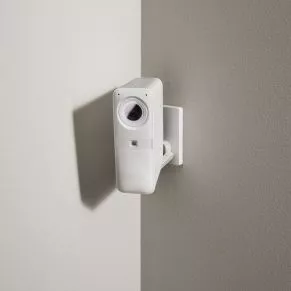
Your Indoor Eyes Never Blink
Keep Watch While You're Out And About
The Wireless Indoor Camera keeps an eye on your home while you’re away, with a built-in motion sensor covering high-traffic areas. Select professional monitoring plans enable live agents to see and speak to intruders during break-ins. Its discounted price is $52.50, reduced from the original $149.99 listed price.
Motion Sensor
Indoor Monitoring
Two-Way Talk
Live Intervention
One room at a time.
Indoor cameras raise different questions than outdoor ones, since privacy and necessity both matter more once a lens points at a living room or bedroom rather than a driveway. Covering shared spaces, like hallways and entryways, makes sense; covering every private room rarely does, and often creates more discomfort than security benefit for anyone actually living there.
A camera facing the front door catches nearly every visitor before anyone even reaches it.
Multi-level homes benefit from staircase cameras, since intruders must pass through shared vertical space eventually.
Private rooms rarely need cameras, and SimpliSafe’s sensor-based alternative covers movement without the discomfort.
Shared living spaces sometimes warrant coverage, though motion sensors often achieve similar protection less invasively.
Privacy matters indoors too.
Outdoor cameras do more preventative work than indoor ones, since visible coverage often deters trouble before it ever reaches a door or window. Driveways, side gates and back doors deserve priority, while wide, open front yards sometimes need less coverage than the narrower, hidden approaches burglars actually prefer using.
Front-facing cameras catch the most activity simply because most visitors, expected or not, approach from the street first. Side and rear coverage matters just as much though, since those less-visible entry points are exactly where real risk tends to concentrate quietly.
 한국어
 English
 Français
 Español